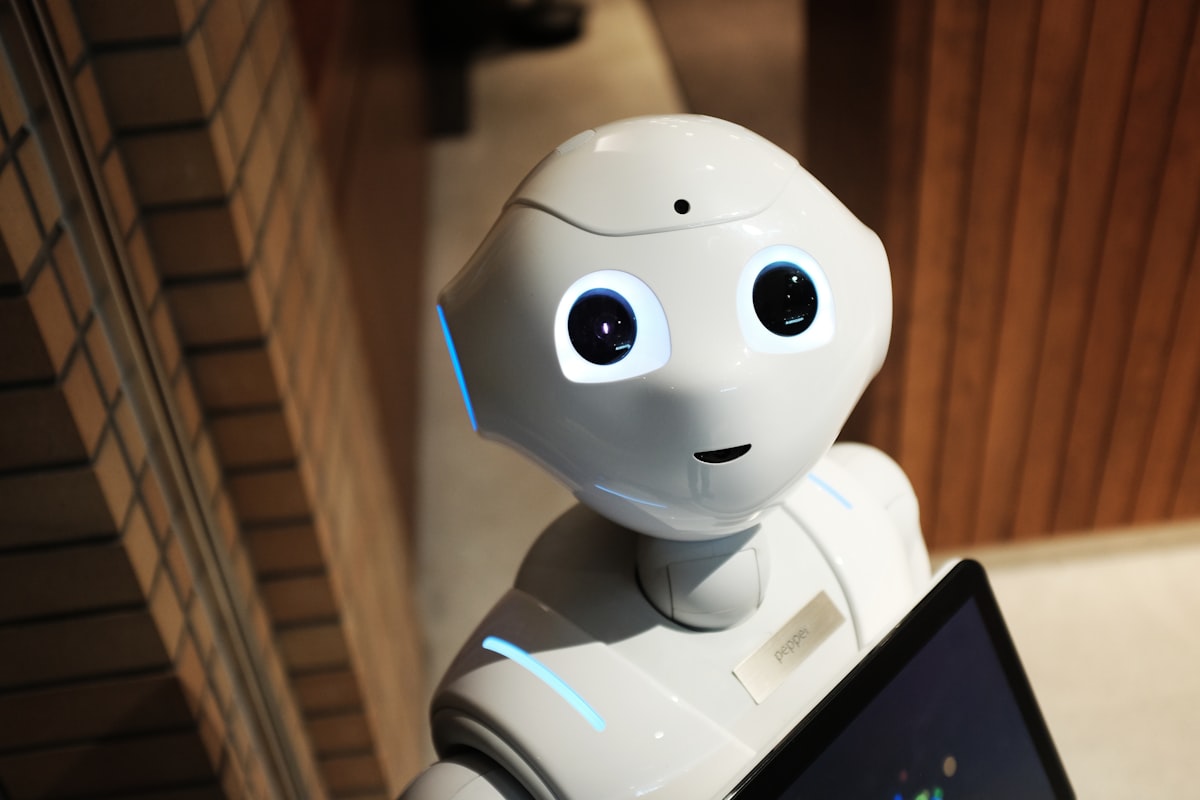
Robotics is experiencing a profound paradigm shift from rigid factory automation toward generalized humanoid systems capable of dynamic locomotion, dexterous object manipulation, and autonomous situational adaptation in unstructured human environments.
1. Actuator Engineering: Quasi-Direct Drive and Harmonic Gearboxes
High-impact bipedal walking requires high torque density combined with backdrivability to absorb ground reaction shocks. Quasi-Direct Drive (QDD) actuators with low gear ratios (under 10:1) allow the robot to feel physical forces directly through current sensing, enabling safe collaborative interaction with humans.
2. Vision-Language-Action (VLA) Foundation Models
Traditional robotic control relied on rigid, hand-coded state machines. Embodied AI models ingest multimodal visual observations and natural language commands, directly generating end-effector trajectories and joint velocity commands across diverse physical tasks.
3. Sim-to-Real Reinforcement Learning
Training robots through millions of real-world trials is financially and physically prohibitive. Physics-accurate GPU-accelerated simulation platforms train reinforcement learning agents across thousands of parallel instances, utilizing domain randomization to ensure seamless transfer to real hardware.
4. Dexterous Multi-Fingered Tactile Manipulation
Humanoid hands equipped with optical tactile sensors (such as GelSight arrays) measure shear forces, texture, and slip in real-time, allowing delicate handling of fragile glassware and precision mechanical tools.
5. Power Density and Thermal Dissipation in Mobile Units
Achieving continuous 4-hour operational autonomy requires high-voltage 48V-100V bus architectures, regenerative braking during decelerations, and lightweight carbon-composite structural skeletons.
Robotics Milestone
Sim-to-real reinforcement learning with domain randomization has reduced controller development cycles from months to mere hours.